
15 August 2026
The Friend Who Became My Sibling
The first person I ever tied a rakhi to who was not, technically, my brother, was a boy who lived two floors down and had been in my life since before either of us could talk properly. Nobody arranged it. Nobody sat us down and explained that we were now, officially, something to each other. One August, I simply had an extra thread, and it felt stranger not to tie it to him than to do it.
Nobody in my family questioned it either, which in hindsight is the part that actually mattered. There was no debate about whether a rakhi "counted" if the person on the other end of it did not share your blood. It just counted, the way most real things in a family end up working - not by rule, but by everyone quietly agreeing to treat something as true until it simply is.
I think this happens more than the festival's marketing usually admits. Rakhi gets sold as a story about blood siblings, and for most people, most of the time, that is exactly what it is. But sit in enough houses on the actual morning and you will notice how many threads go to a cousin who grew up more like a sibling than an occasional relative, a childhood best friend who was around for every important year of your life, a neighbour's kid who slept over so often they may as well have had a bed in your house. Nobody calls this a lesser version of the festival. It is simply a wider one than the definition suggests.
What I have never quite worked out is why this particular kind of bond gets so little language of its own. We have precise words for a blood sibling, for a spouse, for a best friend. For the specific thing that happens when a friendship quietly upgrades itself into something closer to family - close enough that "friend" starts to feel like it is underselling it, but "like a sibling" is the only phrase anyone reaches for, borrowing the vocabulary of a different relationship because English, or Hindi, or Gujarati, never quite built one of its own for this exact thing.
Maybe that is because it does not need one. Maybe the whole point is that it borrows the shape of sibling love precisely because that is the closest available template for a bond that was chosen rather than assigned, sustained by nothing except two people continuing to show up for each other with no biological obligation forcing them to.
That absence of obligation is, I think, what actually makes it count. A blood sibling has decades of shared holidays and family pressure quietly working in the relationship's favour, whether either of you would have chosen each other or not. A chosen sibling has none of that scaffolding. They stayed close to you for years for the single, unglamorous reason that they wanted to. There is something almost more deliberate about a bond like that - less inevitable, and because of that, somehow more clearly a choice made on purpose, year after year, rather than a role someone was simply born into.
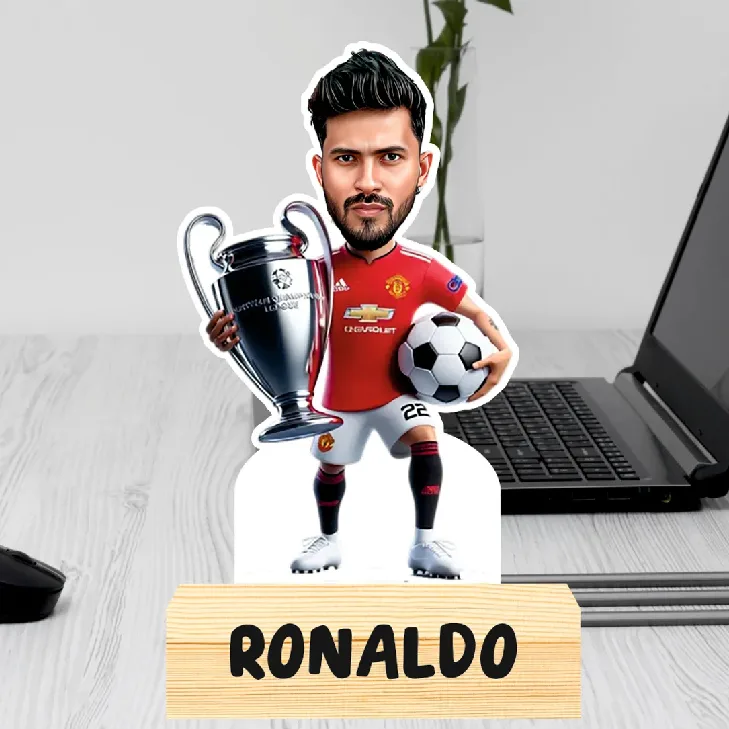
If there is a person like that in your life - the friend or cousin who became something closer than either of those words quite covers - this festival is exactly as much theirs as it is any blood sibling's. Do not let the traditional framing talk you out of it. Tie the thread. Give the gift with the same care you would give anyone else on this list, chosen specifically for the two of you, not a generic "friendship day" token. A caricature that leans into whatever running joke defines your particular friendship, or a framed photo from the years before either of you had any language for what you were to each other, says exactly what the festival is actually asking anyone to say: I chose you, and I am choosing you again this year.
Blood sibling or not, that is the whole ritual, underneath everything else it has picked up over the years. Somebody decided you mattered enough to tie a thread to. The rest is just the specific shape that decision happens to take.
Ready to personalise your own gift?
Shop Now